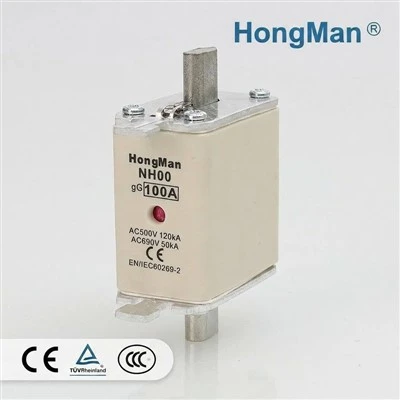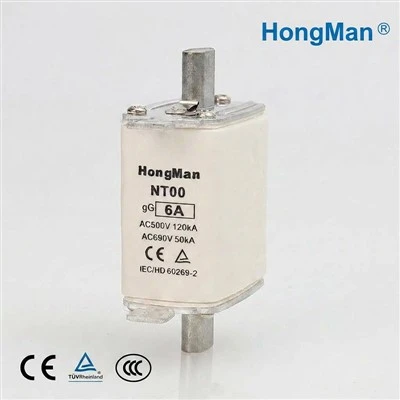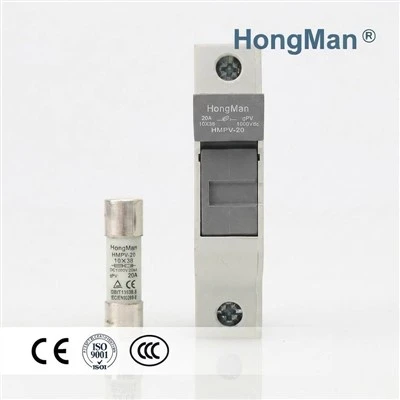

Solar-grade fuses are primarily installed in photovoltaic combiner boxes, the front end of centralized/string inverters, and DC cabinets to protect photovoltaic strings, prevent backflow current, and identify circuit faults.
When selecting a fuse, it is necessary to confirm information such as the photovoltaic panel short-circuit current (ISC-MOD), the system's maximum voltage, altitude, and the highest operating temperature of the surrounding microenvironment at the installation location, and calculate the fuse rating according to IEC or UL standards.
Specific application scenarios are as follows: Distributed photovoltaic power stations commonly use low-current models (e.g., 1A~30A) suitable for string inverters; large ground-mounted power stations can choose high-current models (e.g., 200A~500A) suitable for centralized systems.
When used in high-altitude or high-temperature environments (e.g., exceeding 40℃), the rated current of the fuse must be dated according to the environmental carrying capacity curve.
The matching dedicated bases (such as LH1038, LH2258, CFH10, CFH15 series, etc.) are usually made of flame-retardant materials (such as PA66) and support the design with lights, which makes it convenient for maintenance personnel to quickly troubleshoot faults.