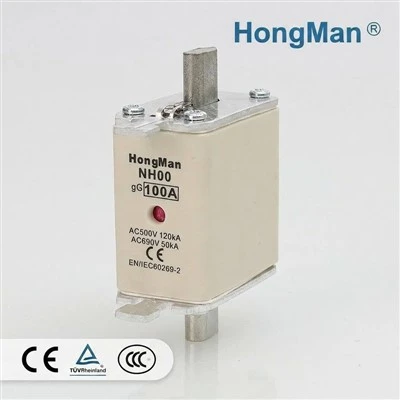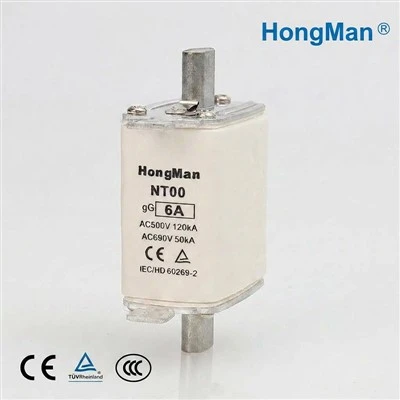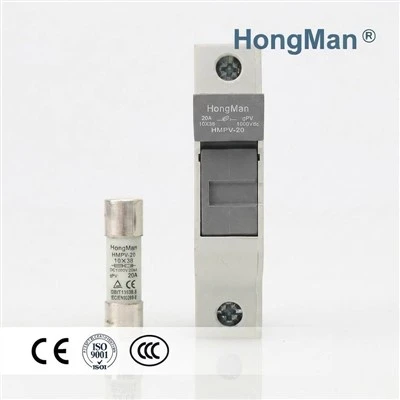

In low-voltage power distribution systems, fuses are electrical devices that provide safety protection. They are widely used in power grid protection and equipment protection. When a short circuit or overload occurs in the power grid or equipment, fuses automatically disconnect the circuit, preventing damage to electrical equipment and preventing the spread of accidents.
A fuse consists of an insulating base (or support), contacts, and a fusible element. The fusible element is the main working part of the fuse; it acts like a special wire connected in series in the circuit. When a short circuit or overload occurs, the current becomes too large, causing the fusible element to melt due to overheating, thus disconnecting the circuit. Fusible elements are often made in the form of wires, grids, or sheets. The materials used for fusible elements are characterized by relatively low melting points, stable properties, and ease of melting. Commonly used materials include lead-tin alloys, silver-plated copper sheets, zinc, and silver. An electric arc is generated during the process of the fusible element melting and disconnecting the circuit. To safely and effectively extinguish the arc, the fusible element is usually installed inside the fuse housing, and measures are taken to quickly extinguish the arc.
Fuses have advantages such as simple structure, easy use, and low price, and are widely used in low-voltage systems.